

Russian Toy
History and Background
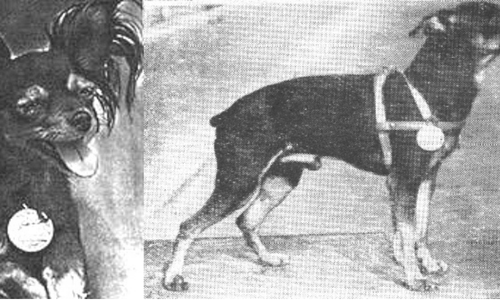
The Russian Toy, also known as the “Russian Toy Terrier,” is a small dog breed originating in Russia. The breed was developed in the 19th century as a companion dog for the Russian aristocracy, and it developed from the English Toy Terrier. After the Russian Revolution, the breed nearly became extinct, but in the 1950s Russian breeders began to rehabilitate it, creating two coat types: short-haired and long-haired. The Russian Toy was officially recognized by the Fédération Cynologique Internationale (FCI) in 2006.
Breed Details
Easygoing with Training
Shedding
Life Expectancy
Pet-Friendly
Family-Friendly
Breed Size
Breed Size
Family-Friendly
Pet-Friendly
Easygoing with Training
Shedding
Life Expectancy
More Breed Details
Life Expectancy
Life Expectancy
12–15 years

Male Weight
Male Weight
Males and females 1.5–3 kg
Female Weight
Female Weight
Males and females 1.5–3 kg

Male Height
Male Height
Males and females 20–28 cm
Female Height
Female Height
Males and females 20–28 cm

Weather Sensitivity
Weather Sensitivity
Sensitive to cold; it is recommended to dress them in warm clothing in cold weather

Energy Level
Energy Level
High

Coat Characteristics
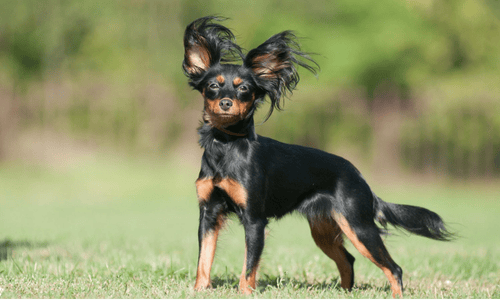
There are two coat types: short and long. Short: smooth, glossy, and close-lying to the body. Long: a coat 3–5 cm in length, with especially long hair on the ears, tail, and thighs. Coat colors include black with tan markings, brown with tan markings, blue with tan markings, and red in various shades, with or without black or brown markings.

Hereditary Diseases
Hereditary Diseases
Dental problems, patellar luxation, and sensitivity to anesthesia
The Breed's Purpose Today
Today, the Russian Toy serves mainly as a loyal and loving companion dog. Thanks to its sociable and energetic nature, it is suited to families, couples, and individuals, especially in urban settings and small apartments. The breed also participates in agility and obedience competitions, and excels at them.
Tips for Training and Educating the Breed
- Early socialization: It is important to expose the Russian Toy to a variety of people, animals, and environments from a young age in order to prevent shyness or aggression.
- Consistent, positive training: Using positive reinforcement, such as treats and praise, will aid learning and reinforce the desired behavior.
- Physical and mental activity: The Russian Toy needs daily activity, such as walks and play, to maintain its health and prevent boredom.
- Coat care: Regular brushing, especially in the long-haired variety, will prevent tangles and maintain a clean and tidy appearance.
The Russian Toy is a small, energetic, and loyal dog, particularly well suited to people seeking an endearing and easy-to-care-for companion. With attention to training, socialization, grooming, and sufficient physical activity, it can be a wonderful addition to any home.

