

English Springer Spaniel
History and Background
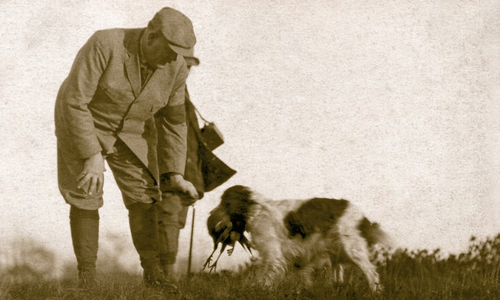
English Springer Spaniel is an ancient hunting dog breed originating in England, where it was developed in the 19th century for bird hunting. Its role was to “spring” the birds out of the bushes, allowing the hunters to shoot them. The breed is considered especially versatile, and was popular among hunters for its highly developed sense of smell, high working energy, and its ability to work in varied terrain. Originally, it was closely related to the Sussex Spaniel and the Welsh Spaniel, but was developed as a separate breed. Today, it is also used as a loyal pet, thanks to its friendly and active character.
Breed Details
Easygoing with Training
Shedding
Life Expectancy
Pet-Friendly
Family-Friendly
Breed Size
Breed Size
Family-Friendly
Pet-Friendly
Easygoing with Training
Shedding
Life Expectancy
More Breed Details
Life Expectancy
Life Expectancy
12-14 years

Male Weight
Male Weight
Males and females 18-25 kg
Female Weight
Female Weight
Males and females 18-25 kg

Male Height
Male Height
Males 48-56 cm
Female Height
Female Height
Females 46-51 cm

Weather Sensitivity
Weather Sensitivity
Tolerant of moderate cold, sensitive to high heat

Energy Level
Energy Level
High

Coat Characteristics
Medium-length coat, smooth or slightly wavy. Main colors: black-and-white, brown-and-white, and sometimes with roan patches

Hereditary Diseases
Hereditary Diseases
Hip dysplasia, PRA (progressive retinal atrophy), and ear problems
The Breed's Purpose Today
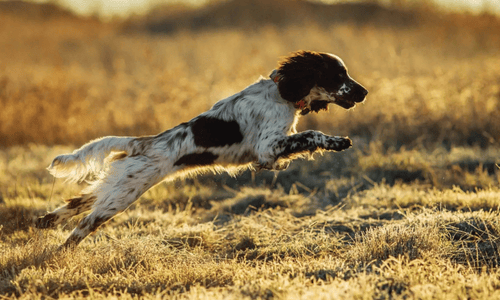
The English Springer Spaniel is used today mainly as a loyal family dog and as a working dog. In many countries it still works as a talented hunting dog, capable of locating and retrieving birds. Thanks to its excellent sense of smell, it is sometimes also used as a tracking and scent-detection dog. Its friendly and sociable character makes it a perfect choice for families who love to hike or engage in outdoor activities. It also succeeds in sporting competitions, such as agility and obedience.
Tips for Training and Educating the Breed
- Positive reinforcement: The dog learns very quickly, but it is important to insist on positive reinforcement such as praise and treats.
- Early socialization: Exposure from a young age to people, children, and other dogs will ensure friendly and safe behavior.
- Daily activity: The breed needs plenty of activity, including long walks and games that challenge it physically and mentally.
- Work training: If possible, try incorporating retrieval games or tasks suited to its hunting instinct.
- A consistent routine: The breed responds well to a clear routine, so it is important to maintain a fixed schedule of activity, training, and rest time.