

Perro de Presa Canario
History and Background
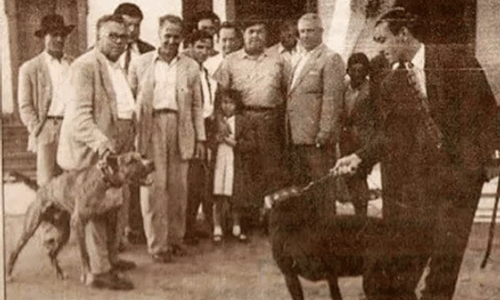
Perro de Presa Canario is a large and strong dog breed originating in the Canary Islands of Spain. The breed was developed in the 15th and 16th centuries as a versatile working dog, intended to serve as a guard dog for farms and herds, as well as a herding dog for cattle. Thanks to its strength, loyalty, and courage, the Presa Canario was an integral part of the farmers’ lives on the islands. Over the years, the breed faced the danger of extinction due to bans on dog fighting, in which it was previously involved, but it was restored thanks to the efforts of dedicated breeders. Today, it is considered a cultural symbol of the Canary Islands.
Breed Details
Easygoing with Training
Shedding
Life Expectancy
Pet-Friendly
Family-Friendly
Breed Size
Breed Size
Family-Friendly
Pet-Friendly
Easygoing with Training
Shedding
Life Expectancy
More Breed Details
Life Expectancy
Life Expectancy
9-11 years

Male Weight
Male Weight
Males 50-65 kg
Female Weight
Female Weight
Females 40-55 kg

Male Height
Male Height
Males 60-66 cm
Female Height
Female Height
Females 56-62 cm

Weather Sensitivity
Weather Sensitivity
Tolerant of heat, sensitive to cold

Energy Level
Energy Level
High

Coat Characteristics
Short, smooth, and coarse to the touch. Main colors: brindle, yellowish-brown, sometimes with white markings

Hereditary Diseases
Hereditary Diseases
Hip and elbow dysplasia, epilepsy, skin problems such as demodicosis
The Breed's Purpose Today
Today, the Presa Canario serves mainly as a guard and protection dog for homes, businesses, and farms, thanks to its loyalty, strength, and impressive appearance. It is especially suited to experienced owners who can provide it with professional training and a stable environment. In addition, it serves as a companion dog for people who value its independent and loyal character. In the Canary Islands, the breed continues to be part of the local culture and is also used in community roles such as search and rescue.
Tips for Training and Educating the Breed
- Professional training from a young age: It is important to begin training early in order to establish authority and prevent behavioral problems in the future.
- Broad socialization: Exposure to other dogs, people, and different environments will help reduce aggression and territoriality.
- An authoritative but positive approach: Authority should be maintained in training, but harsh methods should be avoided; positive reinforcement will help build a bond of trust.
- Moderate physical activity: The breed needs daily activity to maintain its physical and mental health, but it does not require intense training.
- Setting clear boundaries: It is important to define clear boundaries and rules to prevent behavioral problems and ensure that the dog knows its place in the family.

