

Dachshund
History and Background
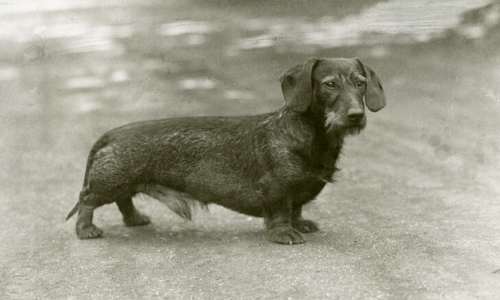
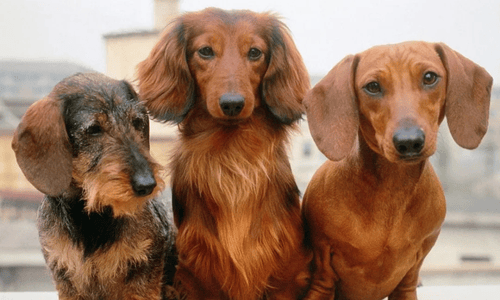
Dachshund, sometimes called the “sausage dog”, is an ancient German breed that developed in the 16th century for the purpose of hunting badgers, foxes, and other small animals. Its name in German means “badger dog” (Dachs = badger, Hund = dog). Its long, low body structure allowed it to enter burrows and chase its prey. Over time, three main types of Dachshund were developed according to coat type: smooth, wire-haired (coarse), and long-haired. In addition, there are three size variations: standard Dachshund, miniature Dachshund, and rabbit Dachshund (Kaninchenteckel).
Breed Details
Easygoing with Training
Shedding
Life Expectancy
Pet-Friendly
Family-Friendly
Breed Size
Breed Size
Family-Friendly
Pet-Friendly
Easygoing with Training
Shedding
Life Expectancy
More Breed Details
Life Expectancy
Life Expectancy
12-16 years

Male Weight
Male Weight
Standard Dachshund 7-15 kg
Female Weight
Female Weight
Miniature Dachshund 4-6 kg

Male Height
Male Height
Standard Dachshund 20-23 cm
Female Height
Female Height
Miniature Dachshund 15-20 cm

Weather Sensitivity
Weather Sensitivity
Sensitive to cold, especially those with a smooth coat; it is recommended to dress it in winter. Good resistance to moderate heat, but excessive heat exposure should be avoided.

Energy Level
Energy Level
High

Coat Characteristics
Smooth: short, close-lying, and shiny coat. Long: medium-length coat, soft and silky, mainly on the ears, chest, and tail. Wire-haired (coarse): hard and rough coat, with a dense undercoat. Common colors: brown, black-and-tan, red, brindle, chocolate, and other colors.

Hereditary Diseases
Hereditary Diseases
Tendency toward back problems, especially disc herniation (IVDD), due to its long body structure. Dental problems and tooth decay. Tendency toward obesity. Genetic eye problems such as cataracts or retinal atrophy (PRA).
The Breed's Purpose Today
Today, the Dachshund is mainly a popular companion dog, known for its sociable, playful, and brave nature, which does not match its small size. The breed is especially suited to families and individuals looking for a small dog full of personality with a need for moderate activity.
Tips for Training and Educating the Breed
- Preventing back problems: Avoid jumping or getting down from high places. A command such as “wait” can be taught to control its activity.
- Early socialization: Expose it to dogs and people from a young age to reduce suspicion or dominant behavior.
- Daily physical activity: Short walks and moderate activities will help release energy and prevent obesity.
- Consistency in training: Due to its stubborn nature, the Dachshund should be trained consistently and with positive reinforcement such as treats and praise.
- Mental challenge: It is recommended to incorporate thinking games such as searching for treats or toys to challenge its active mind.