

French Spaniel: History, Characteristics & Training Guide
History and Background
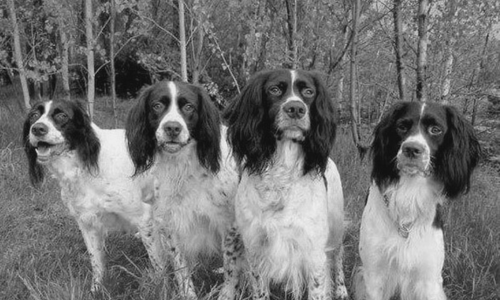
French Spaniel is one of the ancient European hunting dog breeds, originating in medieval France. It was used mainly as an assistant to hunters in locating, retrieving, and pointing, thanks to its highly developed sense of smell and its amazing ability to work in cooperation with people. The French Spaniel developed over centuries and was appreciated by nobles and hunters alike. The breed nearly disappeared during the 19th century following the appearance of other breeds, but was restored thanks to the efforts of dedicated breeders. Today, it is considered one of the most versatile and sociable hunting breeds.
Breed Details
Easygoing with Training
Shedding
Life Expectancy
Pet-Friendly
Family-Friendly
Breed Size
Breed Size
Family-Friendly
Pet-Friendly
Easygoing with Training
Shedding
Life Expectancy
More Breed Details
Life Expectancy
Life Expectancy
10-12 years

Male Weight
Male Weight
Males and females 20-25 kg
Female Weight
Female Weight
Males and females 20-25 kg

Male Height
Male Height
Males 55-61 cm
Female Height
Female Height
Females 54-59 cm

Weather Sensitivity
Weather Sensitivity
Tolerant of moderate cold, sensitive to high heat

Energy Level
Energy Level
High

Coat Characteristics
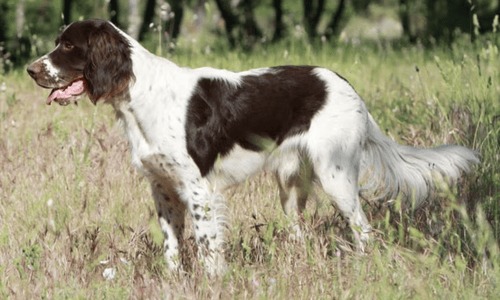
Smooth or slightly wavy coat, of medium length. Main colors: white with brown-chestnut patches

Hereditary Diseases
Hereditary Diseases
Hip dysplasia, eye diseases, and heart problems
The Breed's Purpose Today
Today, the French Spaniel serves both as a talented hunting dog and as a loyal family dog. Thanks to its easygoing and intelligent character, it is suited to families who love outdoor activity. In certain countries, it still works as a hunting dog, mainly in locating birds in open areas. The breed is also common at dog shows, where it is valued for its impressive appearance and varied abilities.
How to Train and Educate the French Spaniel Breed?
- Positive reinforcement: Use rewards and praise to maintain the dog’s high motivation during training.
- Daily activity: The breed needs intense physical activity, such as long walks, running, and active play, to release energy.
- Socialization from a young age: It is important to expose it to new environments, people, and dogs to encourage confidence and friendliness.
- Hunting training: If you have the opportunity, try hunting games or activities that simulate work using its highly developed sense of smell.
- A clear routine: The breed responds well to a fixed daily schedule, especially when training and play are incorporated into the routine.