

Newfoundland Dog Breed Profile: History, Traits & Training Guide
History and Background
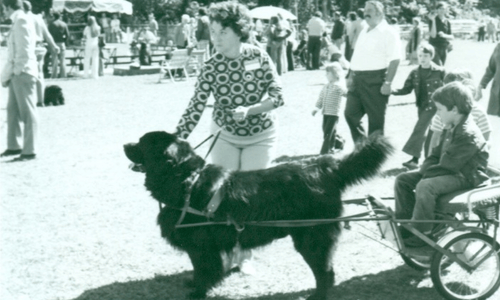
The Newfoundland (Newfoundland Dog), sometimes called the “Newfie”, is a large breed originating on the island of Newfoundland in Canada. The breed was developed as a working dog for fishermen, and helped with tasks such as hauling fishing nets and rescuing people from drowning. The Newfoundland is known for its excellent swimming abilities and its great strength, which made it a sought-after water rescue dog.
Breed Details
Easygoing with Training
Shedding
Life Expectancy
Pet-Friendly
Family-Friendly
Breed Size
Breed Size
Family-Friendly
Pet-Friendly
Easygoing with Training
Shedding
Life Expectancy
More Breed Details
What is the life expectancy of a Newfoundland?
The life expectancy of a Newfoundland is typically 8–10 years.

What is the average male weight for a Newfoundland?
The average male weight for a Newfoundland is 68–80 kg.
What is the average female weight for a Newfoundland?
The average female weight for a Newfoundland is 50–70 kg.

What is the average male height for a Newfoundland?
The average male height for a Newfoundland is approximately 71 cm.
What is the average female height for a Newfoundland?
The average female height for a Newfoundland is approximately 66 cm.

What is the Newfoundland's weather sensitivity?
The Newfoundland is adapted to a cold climate but is sensitive to heat, requiring shade and cold water in hot weather.

What is the energy level of a Newfoundland?
The energy level of a Newfoundland is generally high.

What are the coat characteristics of a Newfoundland?
The Newfoundland has a thick, water-resistant double coat. Coat colors include black, brown, gray, and white with black patches (known as "Landseer").

What hereditary diseases affect Newfoundlands?
Newfoundlands can be affected by hereditary diseases such as hip dysplasia, heart problems (like dilated cardiomyopathy), and cystinuria (a kidney problem).
The Breed's Purpose Today
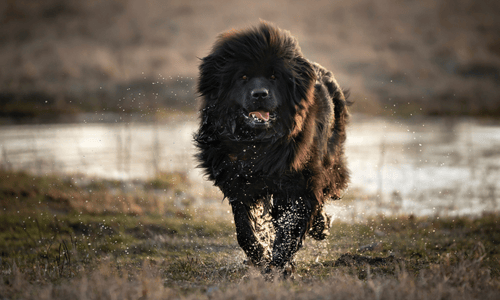
Today, the Newfoundland serves as a loyal and loving companion dog, and is particularly suited to families with children. In addition, it continues to serve as a water rescue dog in various countries, and participates in canine sport competitions such as weight pulling and obedience.
Tips for Training and Educating the Breed
- Early socialization: Exposing the puppy to a variety of people, animals and environments will help develop friendly and secure behavior.
- Consistent, positive training: Using positive reinforcement, such as treats and praise, helps with learning and reinforcing desired behavior.
- Daily physical activity: Daily walks and swimming will help maintain the dog’s health and release energy.
- Coat care: Weekly brushing, and during shedding seasons more frequent brushing, will help maintain a healthy and tidy coat.
- Periodic health checkups: Ongoing veterinary monitoring for early detection of health problems, especially in the joints and heart.
The Newfoundland is a giant, gentle and friendly dog, suited to families looking for a loyal and loving companion. With proper care and training, it can be a devoted and delightful friend for the whole household.