

Norwegian Elkhound: Breed Information, Care & Training Guide
History and Background
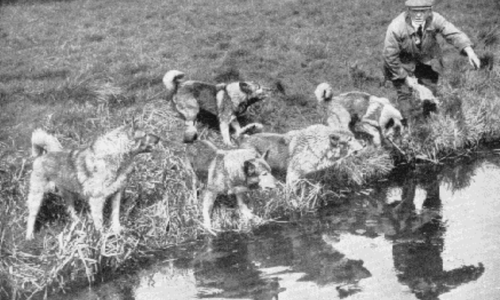
The Norwegian Elkhound (Norwegian Elkhound) is an ancient dog breed originating in Scandinavia, particularly in Norway. Its name reflects its historical purpose: “Elk” refers to the moose, and “Hound” to a hunting dog. These dogs were used to hunt moose, bears and wolves, and were known for their ability to locate and track prey in harsh terrain and cold climates. The Norwegian Elkhound is considered one of the oldest breeds, with evidence of its use in hunting more than 5,000 years ago. In addition to hunting, the breed also served as a guard dog for flocks and property.
Breed Details
How easy is the Norwegian Elkhound to train?
Shedding
Life Expectancy
Pet-Friendly
Family-Friendly
Breed Size
Breed Size
Family-Friendly
Pet-Friendly
How easy is the Norwegian Elkhound to train?
Shedding
Life Expectancy
More Breed Details
Life Expectancy
Life Expectancy
12-15 years

Male Weight
Male Weight
approx. 26 kg
Female Weight
Female Weight
approx. 22 kg

Male Height
Male Height
Males 52 cm
Female Height
Female Height
Females 49 cm

Weather Sensitivity
Weather Sensitivity
Resistant to cold with some sensitivity to high heat

Energy Level
Energy Level
High

Coat Characteristics
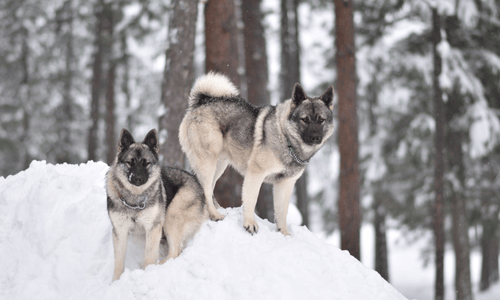
A double, thick coat, with a soft, dense undercoat and a hard, coarse outer layer. The coat color ranges from silver-gray to dark gray, with black markings on the ears and face

Hereditary Diseases
Hereditary Diseases
A tendency toward hip dysplasia, eye problems such as cataracts, and sometimes skin problems
The Breed's Purpose Today
Today, the Norwegian Elkhound serves mainly as a companion dog for active families, thanks to its friendly and lively nature. It takes part in obedience competitions, agility and sport hunting. Thanks to its well-developed sense of smell and its tracking ability, it is also suited to search-and-rescue roles. However, its use as a hunting dog has declined over the years, and it is more common as a family dog.
Tips for Training and Educating the Breed
- Early socialization: It is important to expose the dog to a variety of people, animals and environments from a young age in order to develop friendly and confident behavior.
- Consistent and positive training: Using positive reinforcement and consistency will help in coping with possible independence.
- Physical and mental activity: The breed requires strenuous daily activity, including long walks, running and games, in order to prevent boredom and destructive behavior.
- Coat grooming: The coat should be brushed regularly, especially during shedding periods, in order to maintain a tidy appearance and skin health.
The Norwegian Elkhound is a loyal, intelligent and energetic dog, suited to owners who are willing to invest in its training, grooming and appropriate physical activity.