

Alert and Tense State
- Explanation
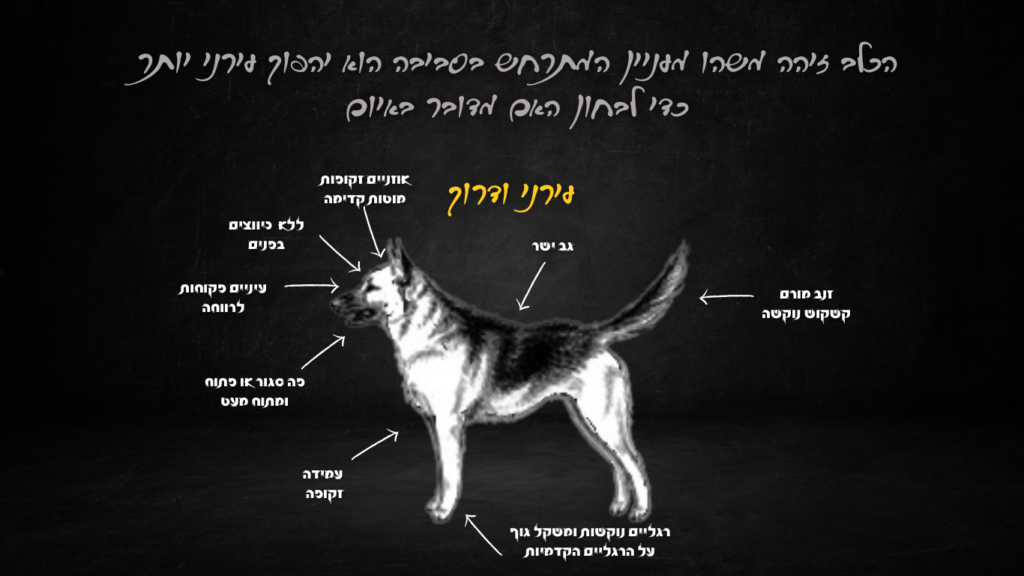
When a dog is in an alert and tense state, it will display body language focused on the stimuli around it. Such a dog will stand upright, with its body freezing itself in a position adapted and ready for action. The tail will stand straight or move gently according to the situation, and sometimes it will be raised high and directed backward. Its ears will be placed forward or in a half-erect position, meaning positioned up and joined on the head, which indicates full concentration on a stimulus or environmental situations. The dog’s eyes will be focused, with a sharp and focused gaze, and it will show a sense of curiosity or complete alertness. The dog will move in an isolated yet quiet manner, not seeking to slip away but rather displaying high sensitivity toward every small change in the environment. The general behavior will be quiet but very focused; sometimes the dog will give signs of attention, such as slight movements of the head, in order to gather more information about the stimulus or the situation. An alert and tense dog is in a state of readiness to deal with new situations, and it can respond quickly if a need for action arises. Such a state is common when the dog is in an environment with many stimuli, such as an open environment or a meeting with new people, in which the dog feels a need to be highly attentive and watch over its surroundings. A dog in an alert state will not necessarily be aggressive, but it is definitely ready to act and respond as needed.
Body Language
- Head
The dog’s head will be erect and focused forward, with a sharp, focused gaze. The dog will keep its head straight and parallel to the ground, which indicates alertness and high concentration. Its gaze will be focused on the stimulus or the environment around it, and it will be ready for action or quick adaptation.
- Ears
The ears will be stiff, placed forward and slightly raised, conveying concentration and attentiveness. They will not be relaxed, but will indicate standing in a state that requires maintaining alertness. In certain cases, the ears may be fully erect, especially if the dog feels a need to understand all the stimuli around it.
- Mouth
The dog’s mouth will be closed but tense, not open or loose. The lips will be gently tensed, and the mouth will not show relaxation. Sometimes signs of slight tension can be seen, such as the upper teeth being slightly exposed, which indicates a high sense of alertness.
- Tongue
The tongue of the dog in an alert and tense state will usually be inside the mouth, but if the dog is very tense, the tongue may be slightly outside, though it will not be loose or protruding. The tongue will not lie loosely as in a calm state, but will remain more pressed against the mouth cavity.
- Body
The dog’s body will be erect and focused, with wide, stable legs, which indicates readiness for action. The dog will not be in a loose state, but will display a sense of alertness that requires readiness for action, and it may maintain stability while staying alert to every environmental stimulus.
- Tail
The tail will be in a vertical or almost vertical position, loose or slightly stiff. It will not be loose or low as in a calm state, but will stand in a ready and tense position. It may move at a small or tiny pace according to how the situation develops, which indicates sensitivity to every small change in the environment.
- How to read body language? Tips and more articles