

Calm and Relaxed State
- Explanation
When a dog is in a calm and relaxed state, it will usually display loose, pleasant body language that reflects a sense of security and ease. Calm dogs will stand or lie down with a loose body, with legs spread out naturally and not held tightly, without muscle tension. The tail will remain in a neutral position; sometimes a slight movement will appear in it, but it will not stand upright or move sharply. Its ears will be in a relaxed position, meaning not folded or standing erect, but hanging loosely at the sides of the head, and sometimes even slightly forward. The eyes will look relaxed, without tension in the eyelids, and the dog may be in a state of a slight smile or even scratching itself, which indicates a sense of comfort. Breathing will be calm and slow, and sometimes it can be heard softly and quietly. This state is common when the dog is in a familiar place and near its owner, and it experiences a sense of security in the current situation. A calm dog will not seek to avoid situations or distance itself from people or objects in the environment, but will continue with interactions of exploration or rest, which indicates a sense of security and mental balance. A dog lying calmly, sometimes on its side or back with its belly facing upward, indicates a complete sense of security, since such a lying position is considered vulnerable, and a dog will not do this if it does not trust its surroundings. When the dog is calm, its facial expressions will be soft, with soft lines around the mouth and eyes, and it will not show tension in the facial skin. Its behavior toward its owner will also be gentle, such as self-scratching or a soft approach; sometimes it will rest its head on the owner’s knee or take up a spot close by, which indicates a sense of comfort and complete relaxation. A calm dog will respond this way not only in a familiar environment, but also when it is in changing conditions such as a new environment or near new people. If it manages to stay calm even in such situations, this is a clear sign of self-confidence and inner peace.
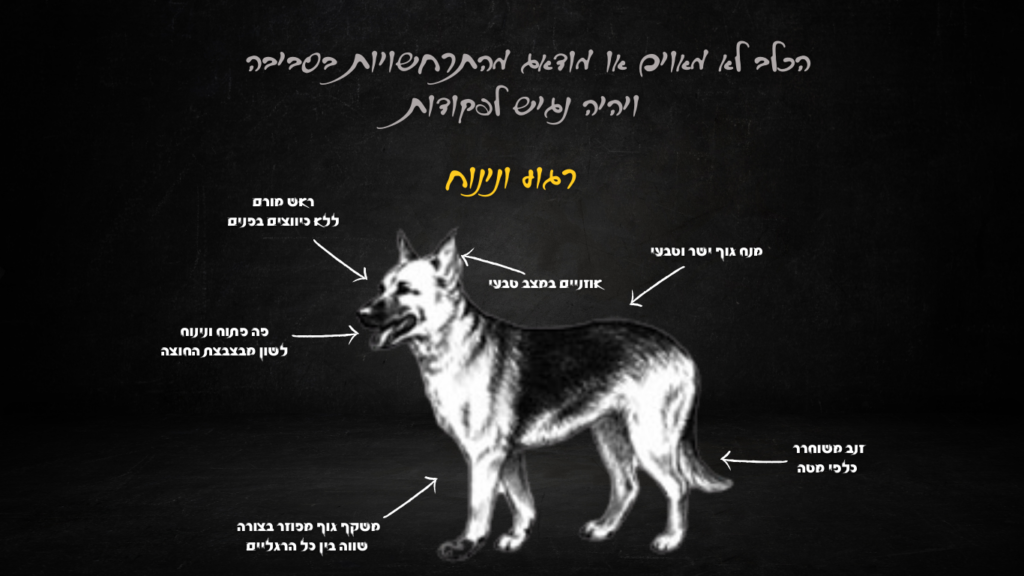
Body Language
- Head
The dog’s head will be in a natural position, not too high and not too low. It will remain in a neutral, untensed position and connect harmoniously to the body. Its eyes will be relaxed, without tension, and the dog may squint or avoid direct eye contact if it feels calm and balanced. It will not show any sign of fear or threat.
- Ears
The ears will be relaxed and drop back slightly or turn to the sides, which indicates feelings of calm and serenity. The ears will not be folded or erect, but in a natural position that suits a feeling of relaxation.
- Mouth
The dog’s mouth will be closed, with loose, soft lips. The dog will not show tension or alertness, and the mouth will remain relaxed. Sometimes a slight smile may also appear, when the lips are loose in a way that hints at calm.
- Tongue
The tongue will be inside the mouth or stick out slightly in a relaxed way. In a calm and relaxed state, the tongue will not be tense or protruding, but will remain relaxed with calm breathing. Sometimes, the dog may let its tongue out slightly as a result of feeling comfortable.
- Body
The tail will be in a neutral position, meaning not too high and not too low. It will not move sharply or tensely, but will show a gentle or loose movement, which indicates a sense of security in the environment. The tail may also be in a position that turns slightly backward in a loose way, conveying ease.
- Tail
The dog’s body will be loose, with legs not held tightly and with a natural posture. The dog will not display signs of tension or alertness, but will remain at rest or move in a calm manner. If it is lying down, the body will be whole and flat on the ground, with the belly facing upward or in a way that looks loose and full of comfort.
- How to read body language? Tips and more articles